

What questions do we get every week?
If yours isn't here, call or text and ask.
We'd rather answer it on the phone than have you guessing.
How the work goes
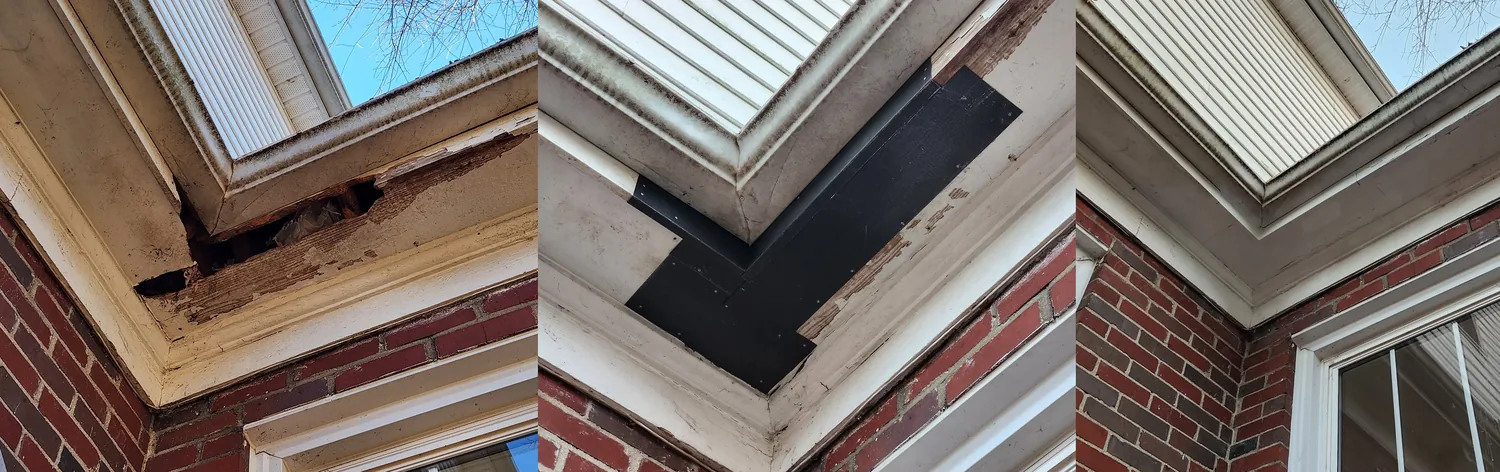
Do you fix the damage, or just take the animal away?
We do the repairs, and we guarantee them, and all of our repair work is guaranteed. Seal the whole house and that is a lifetime limited warranty on the whole house, where we are able to offer it. If the budget means we only close certain spots, the guarantee covers those spots and not the rest, and we will tell you that up front rather than after. Soffits and soffit vents, gable vents, roof vents, chimneys, foundation vents, ductwork and insulation, and dig barriers so nothing gets back under a shed or deck.
That's really the part you're shopping for. Trapping without a repair just means you're doing this again next year.
Do you clean up the mess in the attic?
Yes. Contaminated insulation and droppings come out, the framing underneath gets fogged with an enzyme treatment that breaks down what soaked in, and it gets re-insulated to code. Where ductwork has been fouled or chewed we replace that too.
On bat work in particular this is not optional. Guano carries histoplasmosis, and it does not stop being a problem when the bats leave.
Do I need to be home, or leave the house?
For the inspection it helps if you are there, because half of what we learn comes from what you have been hearing and when.
After that you do not need to be home for us to work.
What if they come back?
That is what the guarantee is for. Seal the whole house and it is a lifetime limited warranty on the whole house, where we are able to offer that. If the budget means we only close certain spots, the guarantee covers those spots and not the rest, and we say so before the work starts rather than after something gets back in somewhere else.
Will the repair look bad?
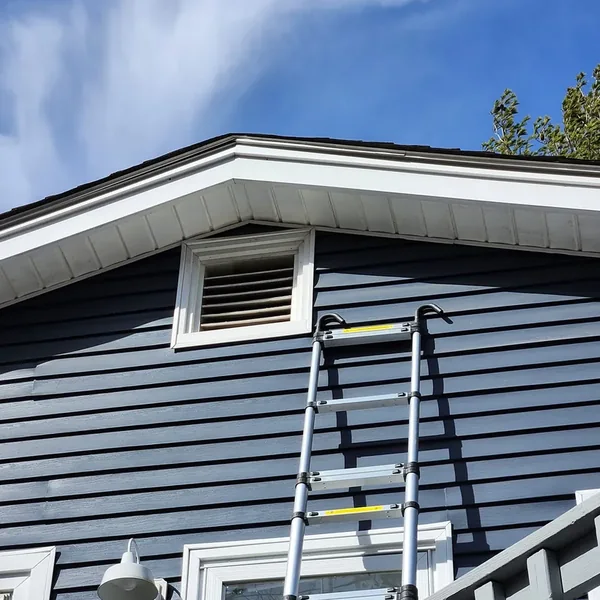
Some folks have told us they don't find it especially pretty, and others think it looks fine, so we'll show you both ways we do it. On a gable vent we can put a bordered metal guard on it, which you will see, or we can build a custom cover that sits close enough you would have to be told to look for it. Both go on from the outside. Either way it gets painted to match.
The animals
Where do the animals go?
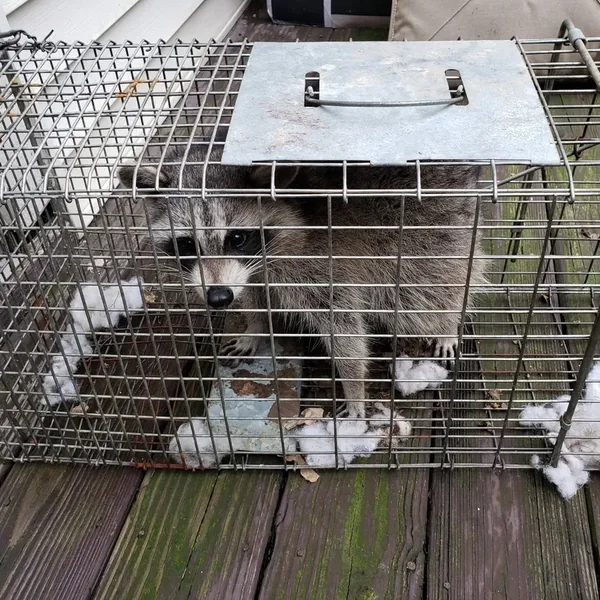
What the law allows us to relocate, we relocate. Kentucky is strict about where wildlife can be released, and rabies vector species, raccoons and skunks among them, cannot legally be moved out of the county they were caught in. We work inside those rules.
Ask anybody else you call the same question. It is the part of this job nobody volunteers, and the answer tells you a lot.
What happens to babies in the attic?
They go with their mother, together, the same day. Orphaned or injured young go to a licensed wildlife rehabilitator.
Can I just handle it myself?
It isn't illegal to deal with it yourself if you own or rent the place. But we hear from folks every week who tried and called us anyway a few days or a few weeks later. Think about what a mother raccoon or a couple of squirrels do to an attic in that time. Chewed wiring, insulation packed flat and soaked, feces everywhere, and now it costs more than it would have.
The other half is knowing how they got in and what's about to fail next. That might be an obvious torn gable vent, or a small gap in the shingling at the bottom of a roof valley that's quietly rotting the fascia board underneath.
Do you handle bats?
Yes, and bats are the one where the order of operations matters more than anything else we do.
Bats are close to the worst infestation you can have in a house. The guano is toxic and carries histoplasmosis among other things, there is the rabies risk, and they bring bat bugs, which behave like bed bugs. Getting them out for good takes a lot of sealing, and that is before any attic cleanup.
There is a full walkthrough of how we do it on the Native Wildlife page, including why the one way valve goes up last rather than first.
Do you deal with stray dogs or cats?
No. Not feral, not tame. That's animal control, not us.
A skunk sprayed my dog. Can you come trap it?
Give us a call. Skunks keep several dens going at once, which is what makes them awkward to pin down, so the inspection matters more than usual on these.
Do you use poison?
No. It's cruel and it doesn't work, and a poisoned animal usually dies somewhere in your wall where you then get to smell it for three weeks.
Money and timing
What's this going to cost me?
We don't publish prices, and we would rather tell you why than pretend otherwise.
What a job costs depends on the house. Somebody shopping fast will always pick the cheapest number on the list, and the cheapest number is usually a free inspection attached to a five thousand dollar exclusion that fails the month after the warranty runs out. We would rather talk it through on the phone and give you a real number for your house.
The one figure we will put in writing: an inspection starts at $150.
Is the inspection free, or does it count toward the work?
It is not free. An inspection starts at $150 to come out and work out what is actually going on.
Our motto on this is that a free inspection is a bad inspection. Somebody who is not being paid to look is being paid to sell you something, and you can usually tell which one you got.
How fast can you get out here?
We call back the same day, and most of the time EJ answers the phone himself rather than calling you back at all.
For scheduled work we are usually out within the week. If something is loose inside the house, we come immediately. That is what the day or night line means, and we mean it.
How long does a job take start to finish?
Anything from a single visit to about a month, depending on the size of the work and how much repair goes with it.
Trapping runs until the trap tells us the last one is out, which is not a date we can pick in advance. Repairs start after that.
Do you take card, or offer any kind of payment plan?
Card, check or cash. Cards carry a five percent fee.
On larger projects we take half at the start and the balance when the work is finished. That is the extent of the payment plan, but on a job that runs a month it makes a difference.
Will my homeowner's insurance cover any of this?
Sometimes, particularly on attic restoration. It depends on your policy and on what caused the damage, so the honest answer is to ask your carrier before you assume either way.
Who we are
What makes you different from the other guys?
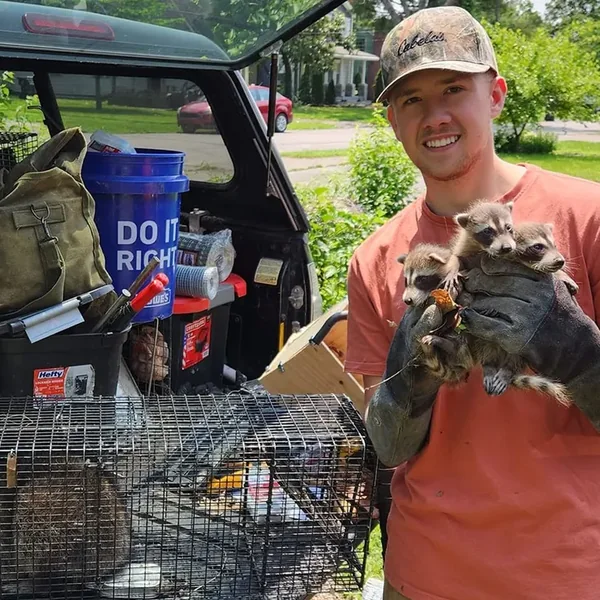
Price is competitive, but that isn't really the answer. Most of our competition doesn't go through the same steps we do every single time. We inspect the whole property. We only trap the animal that's actually causing you trouble, where a lot of outfits will charge you for whatever happens to wander into the cage. And we do a real repair when the trapping's finished.
Then there's what happens to the animal. What the law allows us to relocate, we relocate. That is not what most services do once something is in the cage, and it's worth asking whoever else you call.
Are you licensed and insured?
Yes to both. Kentucky requires a permit to do wildlife control commercially, and an operator has to carry that permit on them in the field. We do.
You do not have to take our word for it either. The Kentucky Department of Fish and Wildlife Resources runs a public directory of permitted operators that you can search by county and by animal. That is a better check than a number typed on a website, because anybody can type a number.
Who actually shows up?
EJ owns it, runs it, and answers the phone, so the person you speak to is the person who scopes your job.
On site it depends on the size of the work. Two supervisors run projects, EJ's dad and Al, and there are around six more working part time or as subcontractors. On a whole home exclusion you will see a crew rather than one man in a truck.