

The animals we deal with most around here.
These are Kentucky animals doing what Kentucky animals do. The trouble starts when one of them decides your attic beats a hollow tree. Here's what each one sounds like, when in the year it turns up, what it does to a house, and how we get it out.
Zoonoses
The diseases these animals can pass to people. Most of the animals above can carry most of what is on that list, so it gets its own section rather than a line under each one.
This is general information, not medical advice. If you have been bitten or scratched, or think you have been exposed, contact your doctor or the Kentucky Department for Public Health right away. Sources: the CDC on rabies, the CDC on raccoon roundworm, and the Kentucky Department for Public Health.
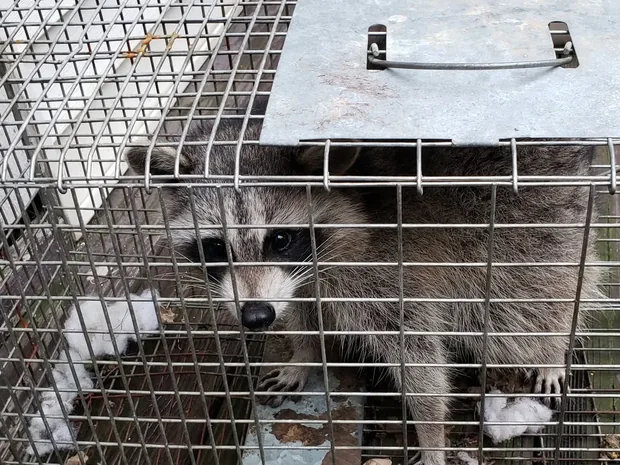
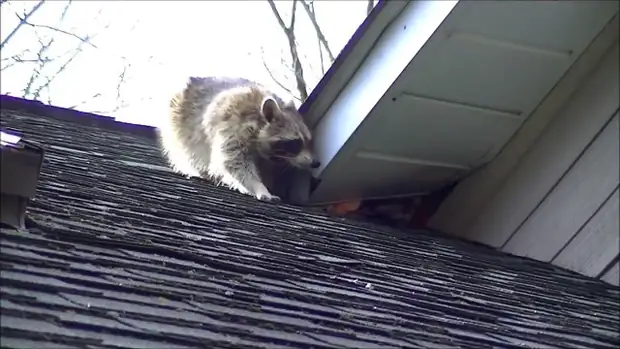
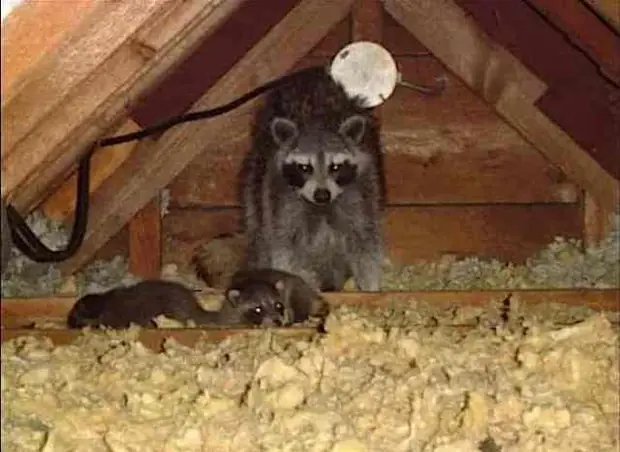
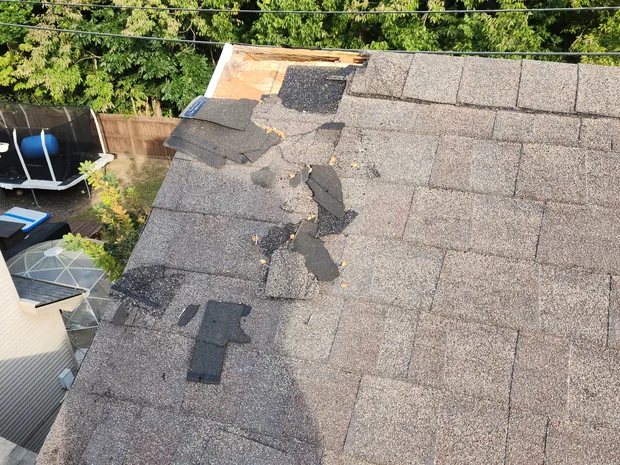
Raccoons
Procyon lotor, a name that translates to something close to "before-dog washer."
What you're hearing. Heavy thumping and dragging overhead, usually between ten at night and four in the morning. They head out around dusk and come back near dawn, so you hear them long before you ever see one. They sound big because they are. A grown raccoon runs anywhere from eleven to fifty five pounds.
When they turn up. Calls can come in any month, but most start in February or March and run through June. That is when the females are having kits, two to five of them on average. It is also common enough to find several full grown adults sharing the same space.
Knowing it's a raccoon. The prints settle it. Every toe connects to the main pad, the front feet look like small hands, and the back feet leave a long V. That holds even when the track is smeared, which is what makes it more reliable than judging by size.
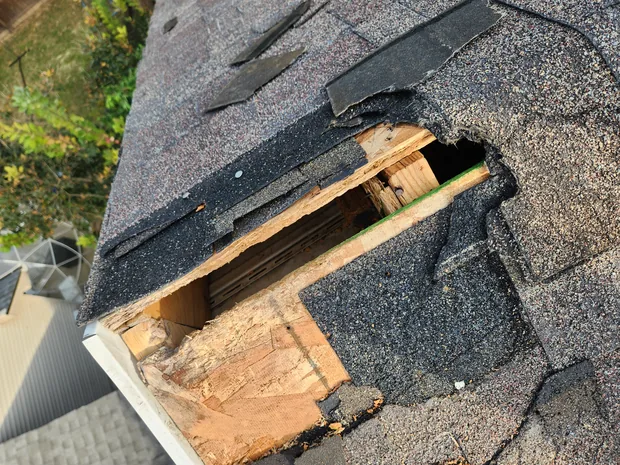
What they do to a house. Chimneys, attics and crawlspaces. They are strong enough to tear open a gable vent or push a soffit up from underneath and go in over the top of it. Once they are in, you have a latrine over your ceiling, and they carry rabies, leptospirosis, salmonella, fleas and roundworm.
How we get them out. Live traps set right over the entry point. Direct capture is dangerous, and poison is cruel and does not work anyway, since a poisoned raccoon dies inside a wall and you smell it for weeks. Kits go out with their mother the same day. Orphans go to a licensed rehabilitator.
Worth knowing. Researchers have recorded over two hundred distinct raccoon vocalizations, and raccoons place near the top of animal problem solving tests. That is not trivia. It is why a bungee cord on the trash can, or a square of hardware cloth over the hole, buys you about a week.
Field notes
- ActiveDusk to dawn
- Peak callsFebruary through June
- LitterTwo to five kits
- Weight11 to 55 pounds
Squirrels
Three kinds around here: gray, red and flying.
What you're hearing. Quick, light scurrying and a lot of gnawing, and it runs on a schedule. Early morning, then again in the late afternoon. Flying squirrels break that pattern and work after dark, so noise at two in the morning that sounds too light for a raccoon is usually them.
Why the gnawing never stops. A squirrel's front teeth grow continuously, about a sixteenth of an inch a week, so it has to wear them down or it cannot eat. Same reason those teeth look orange. The enamel carries iron for hardness.
What they do to a house. This is the one people underestimate. They chew straight through aluminum soffit. They open gable vents. They gnaw holes in the soft lead collars around the plumbing vent stacks on your roof until it leaks into the attic, and you find out about that months later at the ceiling. Then there is the wiring.
How we get them out. Trap at the entry, then exclude with steel. Aluminum will not stop them, and a patch over the hole just moves the problem two feet down the soffit. This is the animal that proves the repair matters more than the trapping.
Field notes
- ActiveEarly morning and late afternoon
- Flying squirrelsAfter dark
- Front teethGrow a sixteenth of an inch a week
- Stops themSteel, not aluminum
Groundhogs
Woodchuck, whistle pig, land beaver, thick wood badger, Marmota monax. An animal of many names, and the largest member of the squirrel family.
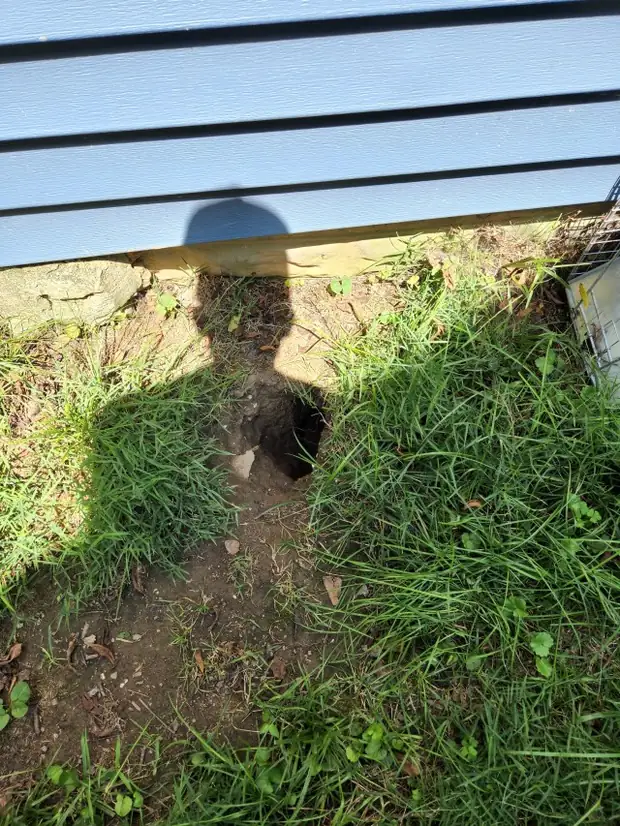
What you'll see, not hear. These are quiet. You find the hole. A burrow entrance up against the slab, under the deck or beside the shed, with a fan of fresh dirt behind it.
The calendar. Groundhogs are true hibernators. They go under around October and their heart rate drops from about eighty beats a minute to five. They come back out mid to late March and into April, which is also when they breed. Gestation is only thirty one or thirty two days, so pups arrive in May, born blind and deaf.
What they do to a house. The burrows are not simple holes. A groundhog tunnel system has a sleeping chamber, a nursery, a separate waste chamber, and a plunge hole for getting out fast. Now picture that under your slab. Every load of dirt they carry out from under a foundation is dirt that is no longer holding it up. They will clean out a garden on the way through as well.
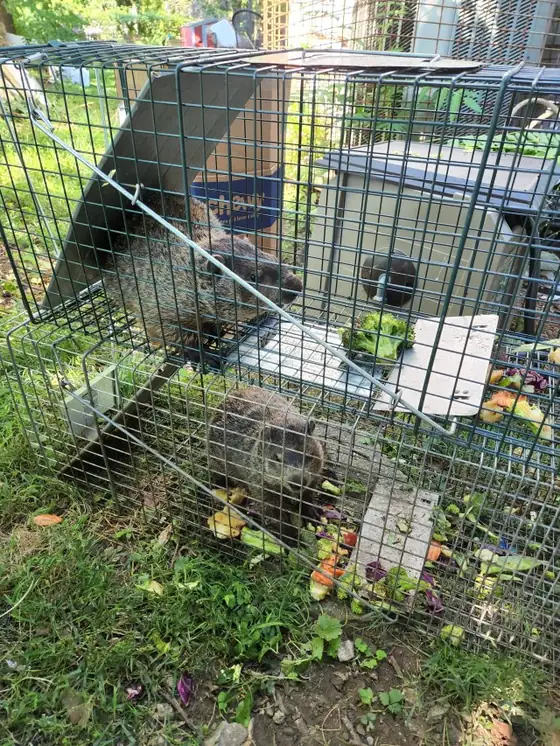
How we get them out. Inspection first, because the number of holes, where they sit and how big they are all change the approach. Then trapping, then a buried steel dig barrier so nothing gets back under there again.
Worth knowing. They climb trees and they swim, which surprises most people. On the ground they top out around eight miles an hour, which is slow for prey, and it is why they never stray far from a hole.
Field notes
- HibernatesOctober to late March
- Gestation31 to 32 days
- PupsBorn in May, blind and deaf
- Top speed8 miles an hour
Skunks
Family Mephitidae. Two kinds live in Kentucky and you are almost certainly dealing with the first one.
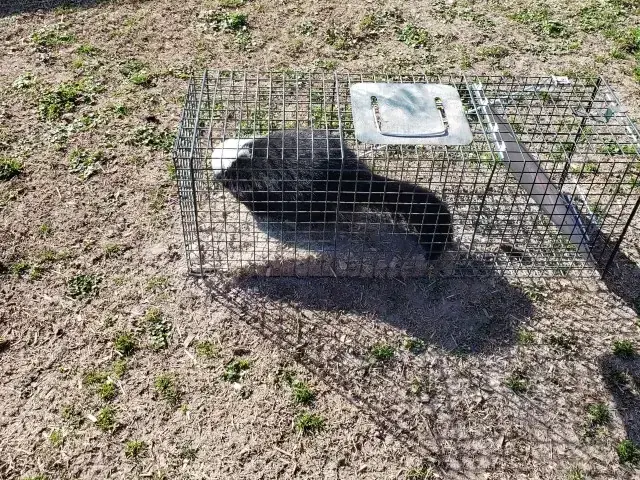
What you'll notice. The smell, obviously. Often that is a male getting turned down, and the spray is how she tells him so. It carries about ten feet. A skunk holds enough for five or six discharges and then needs roughly ten days to restock. A direct hit to the face can blind you temporarily.
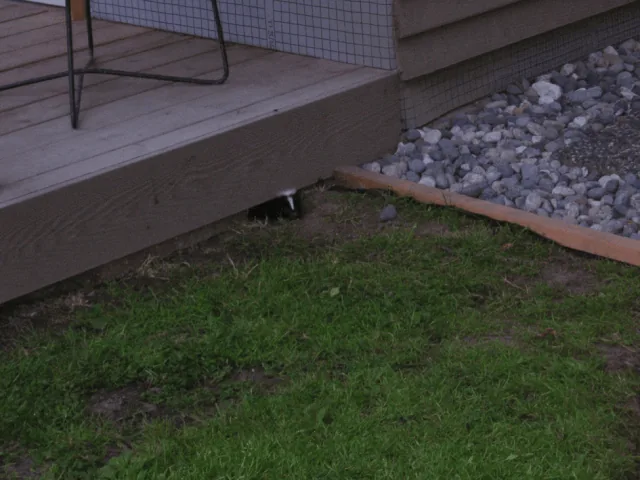
The calendar. Mating season here starts in early February and runs to late March, and that is exactly when they are hunting for somewhere to raise young. Under a deck or a porch is a favorite, along with abandoned burrows, drainage ditches and hollow logs. Gestation averages sixty six days, so kits arrive in May.
Striped or spotted. Striped skunks (Mephitis mephitis) are common statewide: jet black, with white stripes running down either side of the back to the tail. Spotted skunks (Spilogale putorius) are rare here and mostly turn up in the southeastern corners of the state. They are about half the size and look more like a weasel, banded rather than striped.
Why they are awkward to inspect for. Skunks keep several dens going at once, so a den that looks abandoned may not be, and a busy one may sit empty tonight. Spotting the digging is easy. Counting them is not. They also carry leptospirosis and rabies.
How we get them out. Habitat change first where it will work, trapping where it will not. And you do not get sprayed, which is worth something on its own.
Worth knowing. Skunks will eat wasps, honeybees, and venomous snakes, copperheads and water moccasins included.
Field notes
- MatingEarly February to late March
- KitsBorn in May
- Spray rangeAbout ten feet
- ReloadFive or six shots, then ten days
Gray foxes
Urocyon cinereoargenteus, which translates roughly to "ashen silver." One of only two fox species in Kentucky and the smaller cousin of the red.
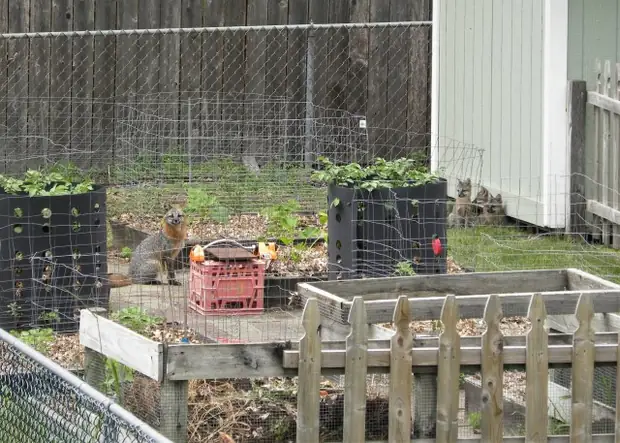
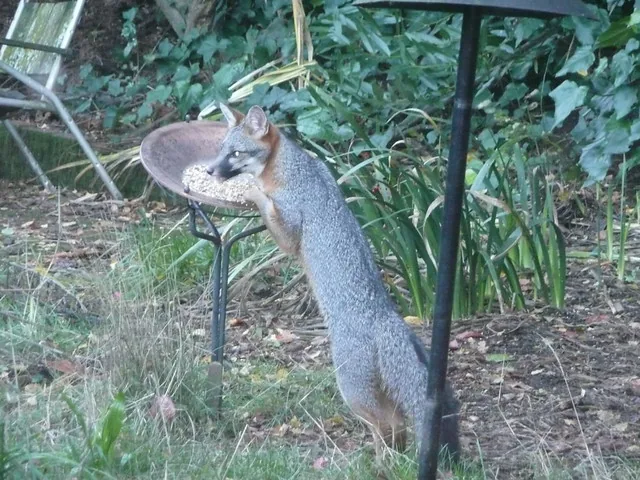
Telling a gray from a red. The red is noticeably bigger and more dog sized. Then look at the back. A gray fox is gray there, sometimes close to blue, with red only on the neck, the legs and the sides. A red fox has no gray on it anywhere. The tail tip settles any doubt: black on a gray fox, white on a red.
Behavior. Nocturnal, with excellent night vision, so you will rarely see one in daylight. Omnivorous, eating fruit, small rodents and carrion, whatever is going. They hunt like a cat, stalking and pouncing rather than running prey down.
The calendar. Breeding runs January through March, the same window as red foxes and coyotes. Gestation is about fifty three days, and a litter can be anywhere from one to seven kits.
What they do to a property. Digging under sheds, decks and outbuildings, and killing poultry. A fox family under a shed will keep mice and squirrels off your garden, then eat the garden themselves. The bigger issue is what comes after. Once a fox family moves out, skunks very often move straight into the burrow they left behind.
How we get them out. Habitat modification first. Pick up the scrap food, cut back the brush and clutter, and put in a dig barrier so it cannot happen again. If a fox is an immediate threat to people, pets or livestock, we start removal right away.
Worth knowing. Gray foxes climb trees, which almost no other canine on earth does, and they are the only canine with retractable claws like a cat. They also mate for life.
Field notes
- BreedingJanuary through March
- GestationAbout 53 days
- LitterOne to seven kits
- Tail tipBlack, where a red fox is white
Coyotes
Canis latrans. Brush dog, American jackal, prairie wolf. They now live in every state and province from the top of Alaska down to the Panama Canal, though in this country they were originally native only to the Great Plains and the Southwest.
Telling a coyote from a dog. Wolves do not live wild this far east, so that is not really the question. Against a dog, a coyote is thinner, with a narrower frame, face and muzzle, and the tail fur is the giveaway. The scat helps too. Coyote droppings are almost always black and usually full of hair, bone, berries or seeds. Their tracks run slimmer and narrower than a dog's.
The calendar. Breeding starts in January or February. Gestation is sixty three days and litters average six. They get noticeably more active and more aggressive through that stretch, especially once females start giving birth in early spring, and that includes toward people and animals posing them no threat at all.
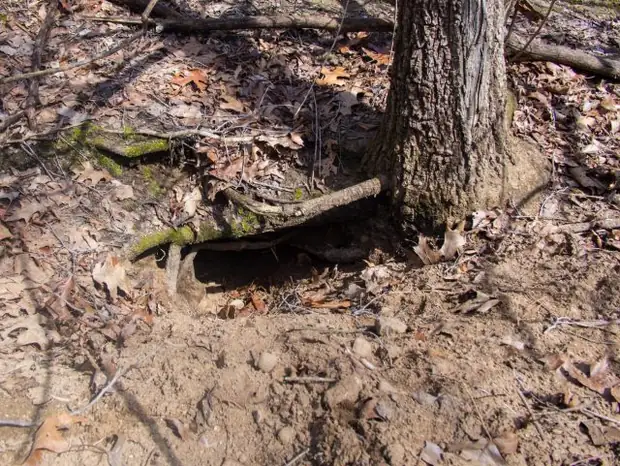
What they do to a property. Livestock and pets, and denning under decks, sheds and homes. A coyote den mouth is wider than a fox den and a good deal wider than a groundhog hole, which is usually how we tell what we are looking at before we ever see the animal.
How we get them out. Habitat modification first, unless there is a pressing threat. Clear the scrap food, clear the brush, put in deterrents. When they do have to come out, foothold traps are one of the only styles that works on a coyote. We would rather not use snares.
Do not try this one yourself. Coyotes can be vicious, and if they have denned under a structure it is time to call somebody. That is true whether you call us or not.
Worth knowing. They run up to forty three miles an hour and hear a quarter mile off. There are nineteen subspecies.
Field notes
- BreedingJanuary or February
- Gestation63 days
- LitterSix on average
- Top speed43 miles an hour
- HearingA quarter of a mile
- SubspeciesNineteen
Bats
Of everything in this list, bats are the one where the order of the work decides whether it succeeds. Done in the wrong sequence you can make the problem worse, and people do.
Why they are the worst of it
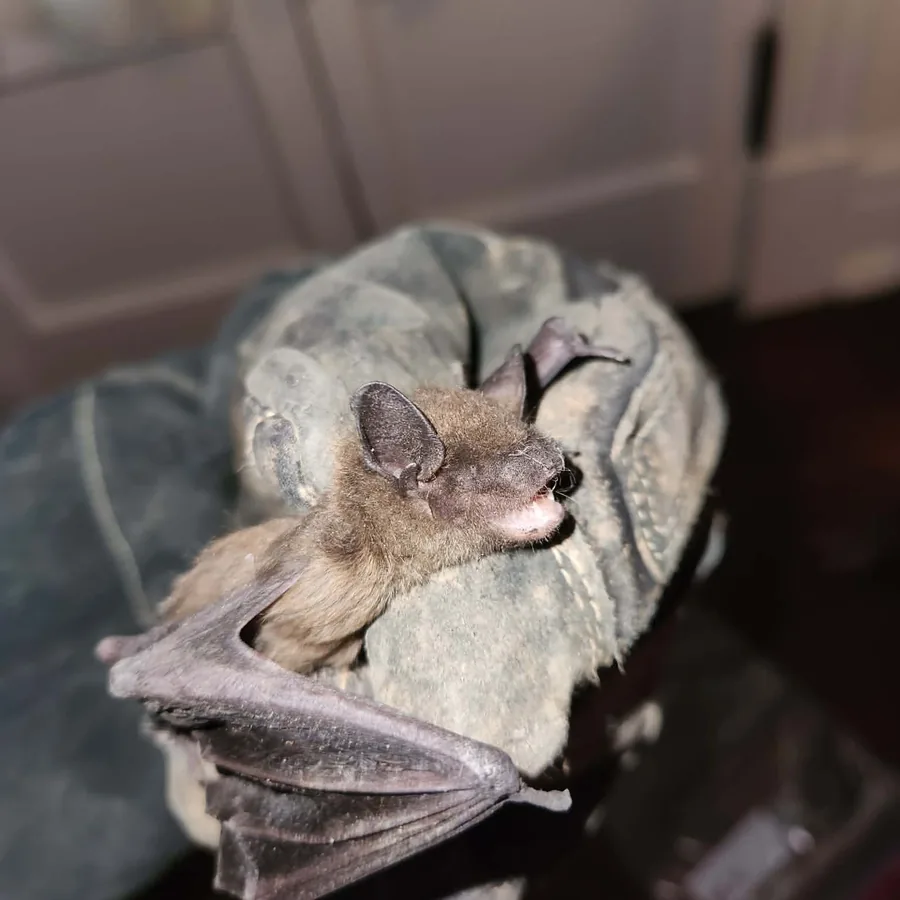
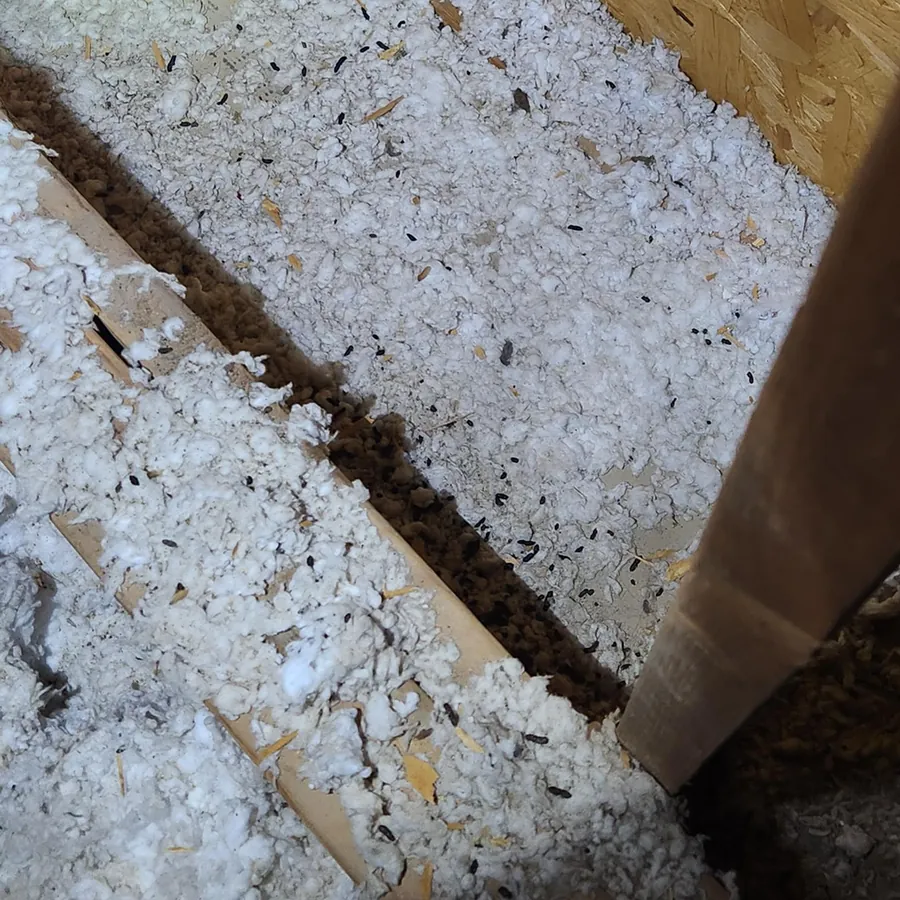
Short of raccoons or rats, a bat colony is about the worst vertebrate infestation a building can have. The guano is toxic and carries histoplasmosis among other diseases. There is the rabies risk. And they bring bat bugs, which behave like a cross between fleas and bed bugs.
Getting them out for good takes an extensive amount of sealing, which is expensive on its own before any attic remediation is priced in. Anyone quoting a bat job cheap is not doing all of it.
What the inspection produces
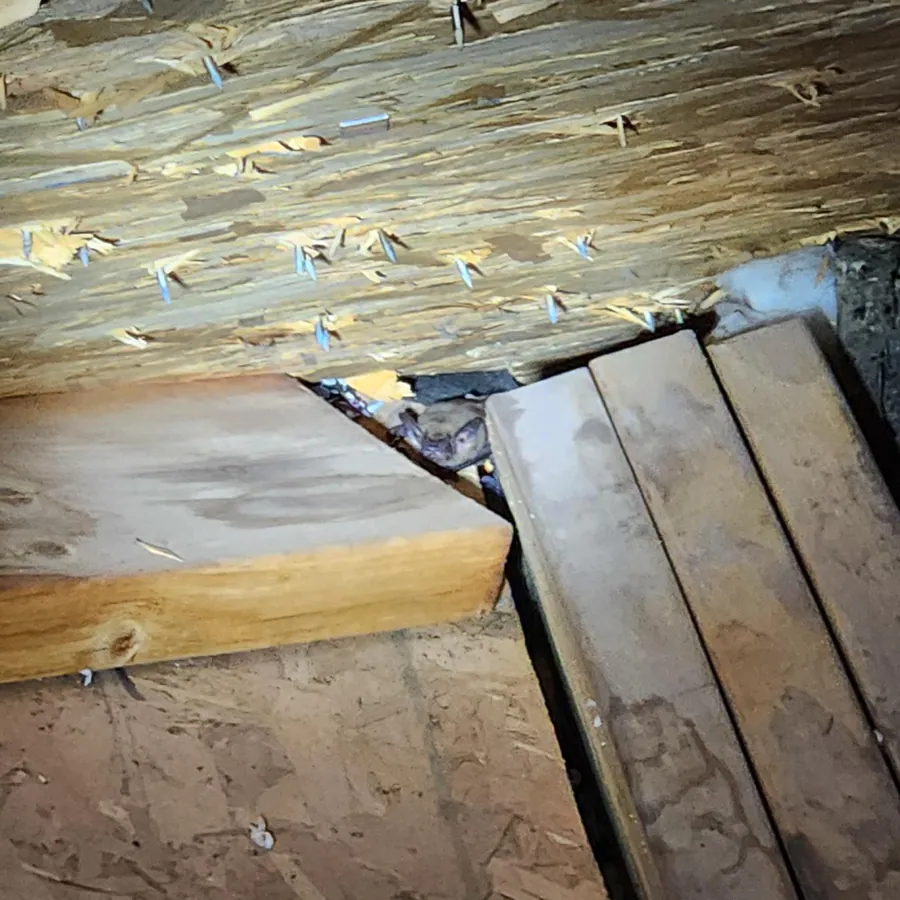
We identify every current entry point and every one that is likely to become one. You get a comprehensive list of all of them, current and potential, with photographs and a description of each, and a summary at the end with a quote for the work.
Attic remediation is scoped at the same time. Guano removal and enzyme treatment, and insulation or ductwork replacement where it is needed.
Why the valve goes up last
A colony has one or two main ways it comes and goes, not a dozen. The one way valve goes on that main entrance. Everything else gets sealed.
The sequence matters because of what bats do when they cannot get back in. If you put the valve up first and leave the other gaps open, the bats fly out at night, find the valve closed to them on the way back, and simply start collecting at those other spots instead. You have not removed the colony. You have spread it across the building.
So we seal everything they could possibly use and fit the valve on the main entrance, the same day where we can. Where the whole job cannot be done in one day, the sealing goes first and the valve goes up last, so that by the time they are shut out of the main way in there is nowhere else on the house left to move to. Bats are like raccoons about this. They are extremely persistent about returning to the place they were brooding.
Then we wait, and check
After the valve is up we either set a camera or come back for another visual inspection, a week to two weeks out, to confirm every bat has left. Once it is clear, the valve comes off and that spot gets sealed and reinforced like the rest.
After that the only thing remaining is whatever cleanup the attic needs.
May 15 to August 15, a colony cannot legally be evicted
That window is the maternity season. Female bats are raising pups that cannot fly yet, so putting a one way valve on the building during it seals the pups inside to die in your attic. State and federal law both prohibit it, and it is the single worst outcome for the house as well as the bats.
Inside the window we can still inspect, seal openings that are not on the colony's flight path, and come get an individual bat out of a living space. The full eviction and the valve happen between August 16 and May 14.
So with bats, when you call matters more than it does with anything else on this page. If you are hearing them in June, call anyway. There is groundwork worth doing before the window opens.
Birds and mice
Birds
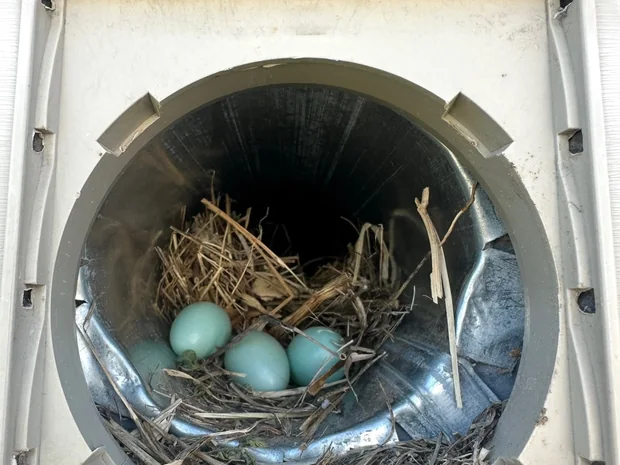
Nesting in attic vents, gable vents, dryer vents, and up under retail signage. We screen the openings off so it does not happen again, and we do it neatly enough that you would have to be told where to look.
Native birds are federally protected under the Migratory Bird Treaty Act. That includes the chimney swifts, woodpeckers and swallows people call us about. If a nest is active, with eggs or young still in it, we cannot clear it or cap the opening until they fledge. House sparrows, starlings and feral pigeons are not native and are not covered, so those we can handle any time of year.
Mice
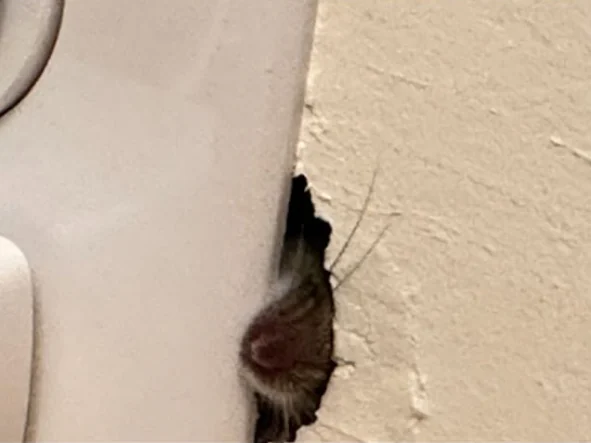
Usually a symptom rather than the problem. They are getting in somewhere, and that somewhere is what we go and find. A magnetic all steel dryer vent cover solves a surprising number of these.
River otters
Otters are back here on purpose. They were effectively gone from Kentucky by 1900, and the state released 355 of them, trucked up from Louisiana, at fourteen sites between 1991 and 1994. There is a season on them now.
The calls are stocked ponds and boat docks. Otters use a dock as a shared latrine, and that is usually the part people phone about rather than the fish.
Field notes
- Back since1991 to 1994, by release
- Weight11 to 30 pounds
- ActiveDusk and dawn, mostly
- The callDocks and stocked ponds
Beavers
The damage is water, not teeth. A plugged culvert or a dammed ditch floods a road, a field or a stand of timber, and a dam can run over a hundred feet long.
Beavers work by ear. Running water is what tells the colony where the leak is, which is why a breached dam is back overnight and why a properly built pond leveler works when a breach does not. Their lodges are protected in Kentucky, so this is not one to take into your own hands.
Field notes
- Weight35 to 60 pounds
- DamCan run past a hundred feet
- The fixA pond leveler, not a breach
- LodgesProtected in Kentucky
Opossums
They rarely do real damage. They get under a deck or into a crawlspace through a hole something else made, and the call is usually about the animal being there at all.
Two things worth knowing. They almost never test positive for rabies in Kentucky, though almost never is not never. And they do not eat thousands of ticks a week. That figure came from five animals in a lab and nobody has been able to repeat it since.
On a horse farm there is a third. Opossums are the host for the parasite behind EPM, so keeping them out of the feed room and off the hay is the whole of the prevention.
Field notes
- GestationAbout 13 days
- YoungUp to 13 in the pouch
- TeethFifty, the most of any land mammal here
- RabiesAlmost never, in Kentucky
Red foxes
The difference from a gray fox is where they live. A red fox digs, so the call is a hole under a deck, a shed or a slab, usually in spring with a vixen raising kits. A gray fox does not dig and climbs trees instead, so those calls are woodpiles and rock walls.
Telling them apart is easier than people think. Look at the back. A gray fox is gray there, sometimes close to blue, with red on the neck, the legs and the sides. A red fox has no gray on it anywhere. The tail settles it if you are still unsure: white tip is a red fox, black tip is a gray.
Field notes
- BreedingJanuary and February
- GestationAbout 52 days
- LitterFour to six kits
- Tail tipWhite, where a gray fox is black
Snakes
Kentucky has thirty two species and four of them are venomous. Around here that means copperheads.
The snake in your attic is almost always a gray ratsnake, which is the biggest snake in the state and a good climber. It is up there because something else got up there first. A snake call is usually a rodent job with a snake on top of it.
Field notes
- SpeciesThirty two in Kentucky
- VenomousFour of them
- Around hereCopperheads
- In the atticAlmost always a gray ratsnake
Snapping turtles
Not the pond wrecker they get made out to be. The research says they take very little game fish and have no measurable effect on fish or waterfowl populations.
What they are is a thirty pound animal that cannot pull into its own shell, so it defends itself with its mouth and behaves nothing like it does in the water. The calls come in late May and June, when females leave the water to nest and end up in a yard sometimes a mile from the nearest creek.
Field notes
- NestingLate May and June
- WeightUp to about thirty pounds
- CannotPull into its shell
- In the waterPlacid, mostly
Zoonoses
What they can give you.
Zoonoses are the diseases that pass from animals to people. Each card names the animal it usually comes from, but most of the animals on this page can carry most of what is here, so read the list as a whole rather than by animal.
Rabies
- Spread byThe six the state names as vector species: coyote, gray fox, red fox, raccoon, spotted skunk, striped skunk. Bats as well, and any mammal can carry it
- How it movesSaliva, in through a bite or through a scratch or a cut
- SeverityFatal once symptoms start. Bats cause about seven of every ten human rabies deaths in this country
- TreatmentThe vaccine works if you do not wait. Any bite or scratch from a wild animal means an emergency room, however small it looks
- Around hereThose six cannot legally be moved out of the county they were caught in. Groundhogs are more than nine in ten of the rabid rodents reported nationally
Raccoon roundworm
- Spread byRaccoons, in their droppings. Latrines in attics, on decks and in woodpiles are the worst of it, but they leave it anywhere they go
- How it movesSwallowing the eggs, which is easier than it sounds. They get onto hands and into dust, and dust from dried droppings gets breathed in the moment the material is disturbed. That is why torn up attic ductwork matters: it pulls the air from a raccoon's space straight into the house. Small children are at the highest risk
- SeverityRare, and grave when it happens. The larvae travel, and the CDC says death or permanent disability is a common result once they reach the brain. They can reach the lungs too, and take an eye. A brain infection is the worst outcome on this page
- TreatmentOne antiparasitic, albendazole, started as soon as possible and ideally within three days of exposure, sometimes with steroids for the swelling. Nothing has been found to work reliably once the larvae reach the brain, so how fast it is caught matters more than anything else
- Around hereThe eggs stay viable for years. Bleach and common disinfectants do not kill them. Only serious heat does, boiling water or flame, which is why there is no spraying your way out of it. The material has to come out of the building
Histoplasmosis
- Spread byBats and birds, in droppings built up in an attic, a chimney or a roost
- How it movesSpores breathed in once the material gets disturbed
- SeverityOften nothing at all. Can turn into serious pneumonia, and worse if your immune system is down
- TreatmentAntifungal drugs, and months of them in a bad case
- Around hereKentucky sits in the Ohio River Valley, one of the two parts of the country where this fungus really lives
Leptospirosis
- Spread byNearly every mammal on this page. Rats and mice, raccoons, skunks, opossums, squirrels
- How it movesUrine, direct or through standing water and wet soil, in through a cut or your eyes or mouth
- SeverityUsually flu like. Can go after the kidneys and the liver, and it does kill people
- TreatmentAntibiotics, and the earlier the better
- Around hereThe bacteria keep for up to three months in wet soil and standing water
Hantavirus
- Spread byDeer mice, white footed mice and cotton rats. Not house mice
- How it movesBreathing air where dry droppings or nesting material got stirred up
- SeverityRare, and grave when it happens. Close to four in ten die of the lung form
- TreatmentNone. There is no drug for it, only hospital support
- Around hereRare in Kentucky. Ninety four percent of US cases have been west of the Mississippi. It is still the reason nobody dry sweeps droppings
Tularemia
- Spread byRabbits and rodents, also muskrats and beavers
- How it movesTick and deer fly bites, handling a dead animal, breathing contaminated dust
- SeveritySerious. Under two percent die when treated, and some forms run a good deal higher
- TreatmentAntibiotics, and it responds well caught early
- Around hereUncommon. Ten reported Kentucky cases in 2023
Rat bite fever
- Spread byRats, mice and squirrels. The bacteria are normal in their mouths, so a carrier looks perfectly healthy
- How it movesBites and scratches, or contact with saliva, urine or bedding
- SeverityUp to one in ten die untreated. It can reach the lining of the heart or the brain
- TreatmentAntibiotics cure it if you start soon after symptoms show
Giardiasis
- Spread byBeavers and muskrats are the classic source, but most mammals can shed it. It lives in surface water
- How it movesSwallowing water from a creek, pond or spring, or contaminated hands
- SeverityRarely dangerous and genuinely miserable. Two to six weeks of it
- TreatmentPrescription antiparasitic. Reliably treatable
Salmonella
- Spread byLives in the gut of a lot of animals. Most human cases come from food rather than wildlife
- How it movesTouching an animal, its droppings, or where it has been, and then your mouth
- SeverityUsually a few miserable days. Hardest on small children and older people
- TreatmentMost people recover without antibiotics
Ringworm
- Spread byA fungus, not a worm. Rodents and rabbits, cats and dogs, and contaminated soil
- How it movesSkin contact with an animal, or with bedding, nesting material and surfaces
- SeverityUsually mild. An itchy ring shaped rash
- TreatmentAntifungal cream. Steroid cream makes it worse
- Around hereInfected hairs stay live in nesting material for up to eighteen months
Fleas, ticks, mites and bat bugs
These four get lumped together and they behave nothing alike. The useful question is what each one wants, and whether it actually carries anything.
Ticks
The dangerous one. Picked up outdoors off vegetation rather than from an infestation indoors. Kentucky has seven species, and between them they carry ehrlichiosis, Rocky Mountain spotted fever, Lyme, tularemia and the alpha gal red meat allergy.
Fleas
The persistent one. They live in the carpet and the nest as much as on the animal, so eggs keep hatching after the animal is gone. Around here the real risks are cat scratch disease and tapeworm. Plague and flea borne typhus are western problems, not Kentucky ones.
Mites
Almost microscopic, and they live in the nest rather than on you. They become a problem at the exact moment the birds or mice leave or die and the mites come looking for something else. Intense itching and rashes, but they do not transmit disease here, and they die off within weeks once the nest is out.
Bat bugs
Nearly identical to bed bugs and routinely mistaken for them. They carry nothing. What they do is move into living space one to four weeks after the bats are gone, looking for a new host, which is why an exclusion that skips the roost hands you a bug problem a month later.
Canine distemper, which is not a people problem
Worth including for what it looks like rather than what it does to you. Distemper does not infect humans at all. It kills raccoons and unvaccinated dogs, and a raccoon with it stumbles, circles and wanders around in daylight, which is exactly how people describe a rabid one.
You cannot tell the two apart from your porch. So treat any raccoon behaving that way as though it were rabies, keep your dog current on its shots, and call somebody.
The disease information on this page follows the CDC.
This is general information, not medical advice. If you have been bitten or scratched, or think you have been exposed, contact your doctor or the Kentucky Department for Public Health right away. Sources: the CDC on rabies, the CDC on raccoon roundworm, and the Kentucky Department for Public Health.